Burn Gummy Sugar-Free Gummies: Maltitol, Xylitol and the Label
Burn Gummy is sweetened with maltitol and xylitol, two sugar alcohols, plus acesulfame K and stevia. Sugar alcohols can cause gas or loose stools in larger amounts, and xylitol is toxic to dogs. Each gummy lists 0 calories and 1 g of carbohydrate, because sugar alcohols give few calories and servings under 5 calories round to 0.
How are Burn Gummy gummies sweetened without sugar?
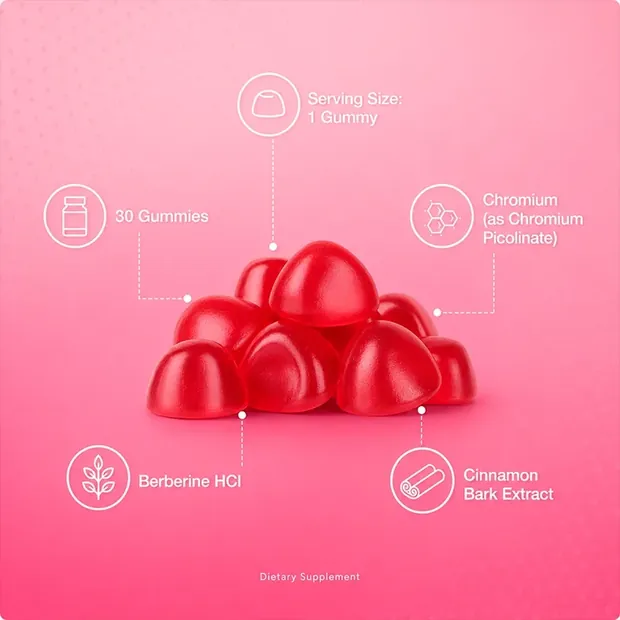
Burn Gummy gummies use four sweeteners instead of sugar. Two are sugar alcohols: maltitol and xylitol. The other two are high-intensity sweeteners: acesulfame K and stevia leaf extract.
Most candy gummies are built on sugar and corn syrup. Those add several grams of sugar to each piece. A sugar-free recipe swaps them for sweeteners that taste sweet but add few or no calories.
The full list of other ingredients
Maltitol, Xylitol, water, pectin, Rice flour, citric acid, Acesulfame K, Stevia leaf extract, Sodium citrate, natural flavoring, coloring (FD&C Red 40).
These make up the gummy itself. The active ingredients sit on top: berberine, chromium and cinnamon. You can see them on the Burn Gummy Supplement Facts page.
What are sugar alcohols like maltitol and xylitol?
Sugar alcohols are sweet carbohydrates that the body only partly absorbs. Scientists also call them polyols. Despite the name, they contain no alcohol of the drinking kind. The name comes from their chemical shape.
Common ones include maltitol, xylitol, sorbitol, erythritol and mannitol. They occur in small amounts in some fruits and vegetables. For food use, they are made in bulk from starches or plant fibers.
Maltitol
Made from starch. It tastes a lot like sugar and gives gummies a smooth, full body.
Xylitol
Often made from birch or corn fibers. It is about as sweet as sugar and has a cool feel on the tongue.
Why use both
Blending sweeteners gives a rounder taste than any one alone and keeps calories low.
Because the small intestine absorbs only part of a sugar alcohol, much of it moves on to the colon. That is the reason they carry fewer calories. It is also the reason for the gut effects in the next section.
Can the sugar alcohols in Burn Gummy cause gas or a laxative effect?
They can, mostly in larger amounts. A 2017 review by Lenhart and Chey looked at how polyols affect the gut (Lenhart & Chey, 2017). Sugar alcohols that reach the colon get fermented by gut bacteria. That can cause gas and bloating. They also pull water into the bowel, which can loosen stools.
The key finding is that the effect depends on dose. More sugar alcohol means more symptoms. The review notes that about 10 g a day of sorbitol is usually tolerated. People with IBS may react at lower amounts.
How much is in one gummy?
The label does not list sugar alcohols on their own line. It lists 1 g of total carbohydrate per gummy. On US labels, sugar alcohols count toward total carbohydrate. So one gummy carries a small amount, well below the levels linked with trouble in most adults.
The Burn Gummy side effects page lists the other things to watch for, including stomach upset from berberine.
Why does the Burn Gummy label show 0 calories and 1 g carbs?
Two label rules explain it. First, sugar alcohols give fewer calories per gram than sugar. Second, US labeling rules let a serving with fewer than 5 calories be listed as 0.
One gram of carbohydrate from sugar would give about 4 calories. Sugar alcohols give less than that. So one gummy lands under the 5-calorie line, and the label shows 0.
- Total calories
- 0per gummy
- Total carbohydrate
- 1 g<1% DV
- Sugar listed
- Noneon the panel
For people who count carbs, the 1 g still matters a little. It is a tiny share of a normal day, but it is not zero. The rounding rule is also why a few gummies taken together would not truly be calorie-free.
Sugar-free is not the same as carb-free
Most sugar alcohols raise blood sugar less than table sugar does. They are not all equal, though. Maltitol has a larger effect than xylitol, and both have more effect than zero. At 1 g of carbohydrate per gummy, the amount is small. If you track blood sugar closely, count it like any other carb and check with your care team.
What do acesulfame K and stevia add to Burn Gummy gummies?
They add sweetness without calories. Both are far sweeter than sugar, so a tiny amount goes a long way. That lets the gummy use less sugar alcohol overall.
Acesulfame K
Acesulfame potassium, often shortened to Ace-K, is a calorie-free sweetener. It is about 200 times sweeter than sugar. You will find it in many diet sodas and sugar-free snacks. It holds up well to heat, which helps during gummy making.
Stevia leaf extract
Stevia comes from the leaves of a South American plant. The sweet parts are called steviol glycosides. They are also far sweeter than sugar and add no calories. Some people notice a slight aftertaste, which is one reason makers blend it with other sweeteners.
What are FD&C Red 40 and pectin doing in Burn Gummy?
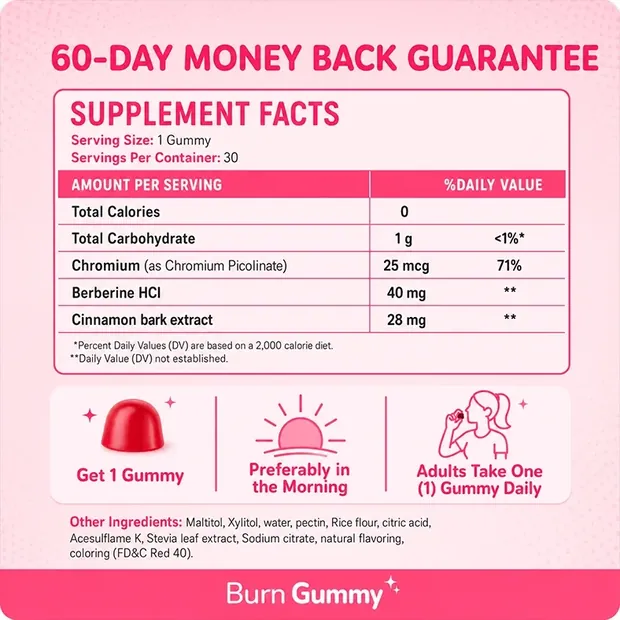
Red 40 gives the gummy its color. Pectin gives it its chew. Both are common in gummy candy.
FD&C Red 40
FD&C Red 40 is a synthetic food color. It is one of the most widely used dyes in US foods and drinks. It is allowed in foods, but some people choose to avoid artificial colors. If that is you, it is good to know it is on this label.
Pectin
Pectin is a gelling fiber that comes from fruit, often apples or citrus peel. Many gummies use gelatin, which comes from animals. This label lists pectin as its gelling agent. Rice flour helps keep the gummies from sticking together. The label does not state whether the product is vegetarian, so check with the seller if that matters to you.
Citric acid and sodium citrate add a light tart taste and balance the acidity. Natural flavoring rounds out the fruit flavor.
How do the sweeteners in Burn Gummy compare?
The four sweeteners in Burn Gummy, with table sugar for comparison
| Ingredient | Type | Calories | What to know |
|---|---|---|---|
| Maltitol | Sugar alcohol | Fewer than sugar | Can cause gas or loose stools in larger amounts |
| Xylitol | Sugar alcohol | Fewer than sugar | Toxic to dogs; keep the bottle away from pets |
| Acesulfame K | High-intensity sweetener | None | About 200 times sweeter than sugar |
| Stevia leaf extract | Plant-based sweetener | None | Some people notice an aftertaste |
| Table sugar (for contrast) | Sugar | About 4 per gram | Not listed on the Burn Gummy label |
The table shows the trade-off. The sugar alcohols give body and taste but can bother the gut in large amounts. The high-intensity sweeteners add sweetness with no bulk. Together they keep each gummy at 0 calories.
Wondering what the active ingredients do? Read Burn Gummy berberine dose explained or chromium picolinate and weight.
Why must Burn Gummy be kept away from dogs?
Xylitol is toxic to dogs. Even a small amount can make a dog's blood sugar drop fast, and larger amounts can harm the liver. People handle xylitol very differently, which is why it is fine in human foods.
Dogs are drawn to sweet, chewy treats. A bottle left on a nightstand or in an open bag is an easy target.
The brand lists five goals for the formula: Fat-Burning Support, Appetite Control, Metabolic Boost, Blood Sugar Balance, All-Day Energy. These statements have not been evaluated by the Food and Drug Administration. This product is not intended to diagnose, treat, cure, or prevent any disease.
For daily use tips, see how to use Burn Gummy.
Sugar-free gummy questions
Does Burn Gummy contain sugar?
The label lists no sugar. It is sweetened with the sugar alcohols maltitol and xylitol, plus acesulfame K and stevia leaf extract. Each gummy has 0 calories and 1 g of total carbohydrate.
Why does a 0-calorie gummy have 1 g of carbs?
Sugar alcohols count as carbohydrate on US labels, but they give fewer calories than sugar. US rules also let a serving with fewer than 5 calories be listed as 0. Both facts explain the numbers.
Can maltitol or xylitol cause gas or diarrhea?
Yes, in larger amounts. Lenhart and Chey found that sugar alcohols can cause gas, bloating and loose stools, and the effect rises with the dose. One gummy a day holds only a small amount.
Is Burn Gummy safe around dogs?
Keep it away from dogs. Xylitol is toxic to dogs, even in small amounts. If a dog eats a gummy, call a vet or a pet poison hotline right away.
Does Burn Gummy contain artificial color?
Yes. The label lists FD&C Red 40 as its coloring. It is a color allowed in US foods, but some people prefer to avoid synthetic dyes.
Ready to try Burn Gummy?
Order from the U.S. authorized merchant, keep your order email, and you are covered by the 60-day money-back guarantee. Questions first? Call +1 (855) 482-1597.
Keep reading
Side effects
Stomach effects, drug interactions, pregnancy, sugar alcohols, Red 40 and the xylitol risk to dogs.
Read more →Supplement Facts
Every line of the label transcribed, with %DV, footnotes and carbs explained.
Read more →Berberine dose explained
How 40 mg of berberine per gummy compares with the 0.5 to 1.5 g a day used in studies.
Read more →
